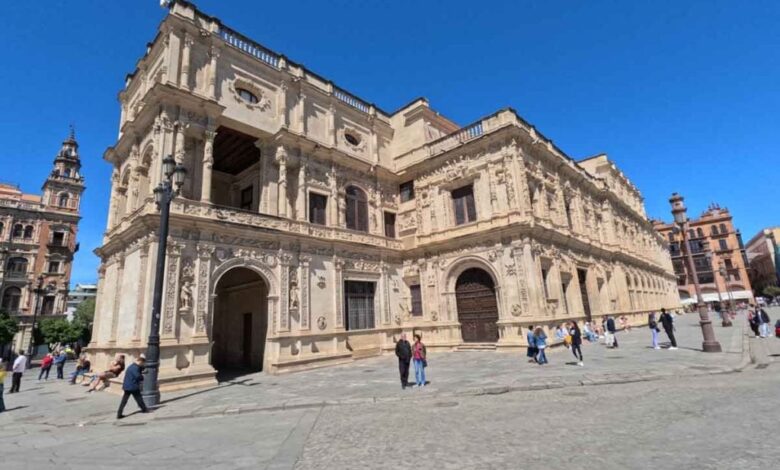
The taxi driver taking me back to the airport is doing a fine job of selling his city. There are many great cities to visit in Spain he tells me, ‘pero Sevilla es el mejor’.
He’s not being brash in suggesting that Seville is the best, it is just that in his humble opinion its combination of fine food, year round sunshine, history, festivals, and people that do not take themselves too seriously is an offering that cannot be matched elsewhere across the Iberian peninsula.
That he is selling me the Andalusian dream on my way out of the city is just a matter of civic pride. More of an exit interview to check if the cogs of the Sevilliano hospitality machine need a few more drops of Andalusian picual extra virgin olive oil.

He was keen to hear if I had enjoyed my stay (I had), had eaten well (very much so), and rather mischievously if there would be as much sun at home in Manchester (definitely not).
Seville is an ideal destination for a city break or even longer if you have the time. The city is big enough to keep you busily cramming in the sights on a short break but still small enough that you can cover them on foot.
There’s plenty of things to do and sites to see which we will talk about below.
When to visit
It can be ferociously hot in the height of summer, but is perfect in spring and autumn and not to be ruled out for winter sun either when crowds will be thinner on the ground.

Getting into the city from the airport
A taxi from the airport into the centre will cost around €25-€30 which is the option we took and takes around 20 minutes, but there is also a bus which runs every 15 minutes – the EA Aeropuerto Especial – which can be booked in advance and costs around €7 and takes 35 minutes.
There are cities that you visit, and then there are cities that stay with you. Seville is firmly in the latter camp.
From the moment you step into its wide plazas and winding lanes, you’re wrapped in a tapestry of colour, sound, and flavour that seems designed to slow you down and draw you in.
It is a great year round city break with plenty to see and do but there are big festivals that run across the year when the city is busier so you may want your trip to coincide with these or not.
Semana Santa (Easter), the Feria de Abril, the April Fair which is a week long festival of Andalusian culture, and the Feria de San Miguel in September are ones to check out when booking your trip.
The Real Alcazar
The absolute must do of any stay in Sevilla is a visit to the the Real Alcazar.
The site began as a fort in 913 before developing into the spectacular Moorish royal palace and gardens that have served as a location to Game of Thrones and make it Seville’s most popular attraction.

The Palacio de Don Pedro houses the most beautiful parts of the Alcazar, full of moorish columns, arches, domed ceilings decorated with the most beautiful and intricate arabesque carvings.

The Salón de Embajadores, the former throne room of Pedro I, is the most elaborate of all the rooms with its symmetrical design and beautiful ceiling full of twinkling decorations that make it look like the night sky.

Queues can be large so best to buy online ahead of your visit, with early and later times generally attracting less visitors but it is always busy.
Plaza de España and Flamenco in the Streets
Plaza de España is one of those places that feels almost too grand to be real.

The sweeping curves of the building, the tiled alcoves representing Spain’s provinces, and the gentle shimmer of the canal all combine to make it a stage in itself. And often, it literally becomes one.
As you wander through the gardens or across the plaza, it’s not unusual to stumble upon a group of flamenco artists.
Their heels strike the ground with a rhythm that echoes through the arches, their hands clapping in sharp counterpoint.
A tambourine lies upturned, waiting for coins and preferably notes, but the real reward is the applause. It’s raw, passionate, and fleeting—an impromptu show that entertains all and a casual introduction to flamenco.
For something more intimate, Seville offers countless venues where flamenco is performed with all the intensity the art deserves.
We booked tickets for Lola, where the price of admission included a drink and an hour of Andalusian fire.

If you’ve never seen flamenco before, it’s not just dance—it’s storytelling through movement, music, and emotion and it is quite a thing to behold.
Mercados: A Feast for the Eyes and Stomach
Markets are where a city reveals its everyday soul, and Seville has plenty to explore.
Triana Market, across the Guadalquivir River, was our favourite. It’s a place where locals shop for fresh produce, but also where you can perch at a counter and enjoy oysters, cava, or a plate of seafood cooked to order.

Almost opposite, Mercado Lonja del Barranco offers a more polished experience.
It’s modern, stylish, and yes, pricier, but the vendors here put creative spins on Spanish classics. Both markets are worth a visit—one for its authenticity, the other for its flair.
And then there’s El Jueves, the Thursday flea market along Calle de la Feria.

It’s a jumble of flamenco dresses, Spanish vinyl records, keys that look like they once opened dungeons, and tables piled high with what might look like tat to the untrained eye.
But hidden among it all are treasures waiting for someone with patience and imagination.
Food and Drink Tour: Learning Through Taste
Food tours have become a staple of our holiday experience as they are a great way of exploring local gastronomy and the Seville tour we did with Spain Food Sherpas was one of the best.
Over three hours, our guide Carolina led us through backstreets and into tapas bars both famous and tucked away off the beaten track.
We learned the difference between a montadito—a small sandwich—and a pringa, a hearty roll stuffed with pork, chorizo, and black pudding. Both delicious.

We discovered why sangria is a tourist’s drink, and why locals prefer the refreshing simplicity of tinto de verano. And we ate, and drank, and walked, and ate and drank and walked some more.
It’s the kind of experience that gives you more than just food—it gives you context, stories, and a deeper connection to the city and one I would thoroughly recommend.

Away from the tour we had great food everywhere we went. If you have a bad food experience in Seville then something has gone terribly wrong.
There are great places to eat across the city and food is very reasonably priced. My advice is to check what the locals are eating, ask waiters what the specials of the bar or restaurant are, and find some hidden gems.
We stayed around the corner from Bar Alfalfa which was incredibly popular and justifiably so as we had an evening meal and breakfast there.

A few minutes walk from Bar Alfalfa is Catalina La Barra which I would also recommend, but with a little bit of research delicious food is not hard to find in Seville.
Casco Antiguo
We had booked ourselves an apartment in great spot in one of of the very narrow backstreets of the Alfalfa area of the Casco Antiguo – the old town area of the city.
This warren of backstreets are the arteries delivering a stream of locals and phone-map-app following tourists to squares full of bars, cafes, chatter, and street music.

Aimlessly wandering these back streets to see what you can find is a great voyage of discovery on its own, and when the afternoon sun is at its peak these narrow pathways offer some cool respite.
Seville Cathedral: A Monument to Grandeur
It’s hard to overstate the scale of Seville Cathedral. Step inside and you’re immediately dwarfed by soaring Gothic vaults that seem to stretch endlessly upwards.

Built on the site of a former mosque, it carries echoes of Moorish design in the Patio de los Naranjos and the Giralda tower, yet the overall impression is one of Christian ambition—an attempt to build a church so vast that “those who see it will think we were mad,” as the story goes.
The golden altarpiece glitters with astonishing detail, while chapels tucked into corners reveal centuries of devotion.

And then there’s the tomb of Christopher Columbus, a magnet for visitors and a reminder of Spain’s role in shaping the world beyond its borders.

Climbing the Giralda, once a minaret and now a bell tower, rewards you with sweeping views across the rooftops of Seville—a panorama that makes the climb well worth the effort.
Las Setas: Seville’s Modern Canopy
If the cathedral is Seville’s past carved in stone, then Las Setas is its bold leap into the present.

Officially called the Metropol Parasol, this vast wooden structure rises above Plaza de la Encarnación like a cluster of giant mushrooms and ‘Las Setas’ (the mushrooms) stuck with the locals.
It’s striking, unexpected, and impossible to ignore.
Beneath its shade, locals gather at the market (the place to buy jamon), children play, and the square hums with daily life. But it’s up on the rooftop walkway where Las Setas truly shines.
From here, the city unfolds in every direction—church spires, tiled rooftops, and the distant shimmer of the Guadalquivir.
You do have a pay a fee of €15 for entrance to the roof but the views are worth it, especially if you can get up there in the magic sunset hour, when the light softens and Seville seems to glow.
Beyond Seville: A Day in Córdoba
Seville is captivating, but it’s also perfectly placed for day trips. Córdoba, just a short train ride away, offers a change of pace and a glimpse into another layer of Andalusian history.
The stunning Mezquita, with its forest of red-and-white arches, is reason enough to go. But the city’s patios, narrow lanes, and riverside walks make it a destination in its own right.
You can get return trains to Córdoba, from Seville-Santa Justa station for €15-20 and it’s a 45 minute train ride and a 10 minute walk from Córdoba, station into the old town.

Final Thoughts
Seville is a city of contrasts: grand plazas and hidden alleys, traditional markets and modern food halls, spontaneous flamenco and carefully staged performances.
It’s a place where history and everyday life intertwine, and where every corner seems to offer something worth pausing for.
If you’re looking for a city that feeds all the senses and your stomach, then Seville delivers. And like the rhythm of flamenco itself, it lingers long after the performance ends.
Source link