Pinkies Down: The Strict History and Etiquette of British Afternoon Tea

There is a pervasive myth that Afternoon Tea is a dainty, frivolous affair—a tourist tick-box exercise involving cucumber sandwiches and stale scones.
But to dismiss it as such is to ignore its origins as a radical act of rebellion, a weapon of class warfare, and, surprisingly, a pivotal battleground for women’s rights.
When you sit down for tea today, you are participating in a ritual that once dictated the social standing of an entire empire. Every sip, every stir, and every scone is laden with a coded history of hunger, snobbery, and revolution.
Here is the truth behind the doilies—and why you must, under all circumstances, keep your pinky down.
The Duchess and the “Sinking Feeling”
We owe the entire concept to one woman’s grumbling stomach. In the 1840s, English dining habits were shifting. Dinner had moved fashionably late, often served as late as 8:00 or 9:00 PM, leaving a cavernous gap after lunch.
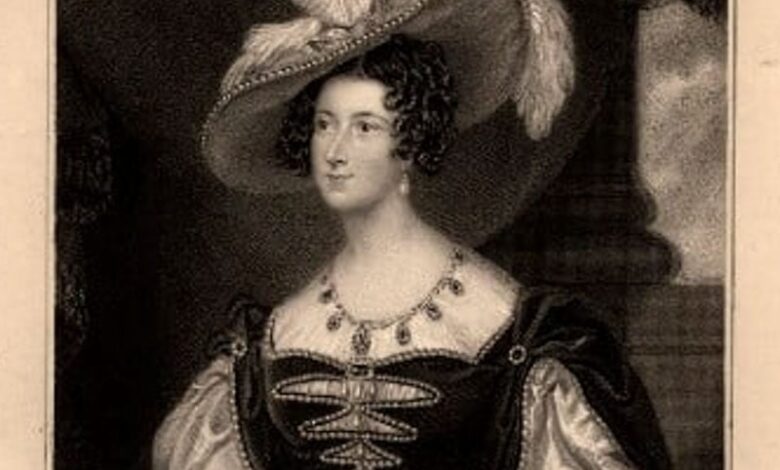
Anna Russell, the 7th Duchess of Bedford (and a lifelong friend of Queen Victoria), found this intolerable.

She complained of a “sinking feeling” around 4:00 PM. Desperate, she requested a tray of tea, bread and butter, and cake be brought to her private dressing room.
What started as a private snack quickly became a social coup. She began inviting friends to join her.
It was intimate, it was exclusive, and crucially, it was private. By the time she brought the custom to London, it had exploded into a society staple. But it wasn’t just about the food; it was about the clothes.
The Tea Gown: A Feminist Revolution?
In the Victorian era, a woman’s life was physically constricted by the corset. Rigid, bone-crushing, and mandatory for public appearances, it was the armour of respectability.
Afternoon Tea, however, was originally an “At Home” event. This loophole allowed women to do something scandalous: take off their corsets.
They replaced them with the “Tea Gown”—a looser, flowing garment inspired by European negligees and Asian robes.

For a few precious hours in the afternoon, women could breathe, move, and talk freely without the physical restrictions of polite society.
It was a liberating, almost subversive fashion movement disguised as a meal. When you sit for tea today, remember: this was once the only time of day a Victorian woman could truly be comfortable.
The Great Milk Debate: A Class Detector
“Milk in first or milk in last?” This is not a question of taste; it is a question of wealth.

Historically, the answer revealed the quality of your china—and by extension, your bank balance.
Milk First: If you were working class or lower-middle class, you likely used earthenware or soft-paste porcelain. If you poured boiling tea directly into these cups, they would crack. Therefore, you had to put the cold milk in first to act as a coolant.
Milk Last: The aristocracy drank from fine bone china (often imported from China or produced by high-end factories like Spode). This material could withstand the thermal shock of boiling water. Putting the milk in last was a deliberate flex—a way of showing your guests, “Look, my cups didn’t shatter. I am rich.”
Today, unless you are worried about your mug exploding, the correct etiquette is Milk Last. This allows you to judge the strength of the tea as you pour.
The Pinky Myth
Let’s banish this immediately: sticking your pinky out is not posh; it is rude.
The origin of the “extended pinky” is debated. Some historians trace it to medieval times when spices were eaten with fingers, and the pinky was kept clean for dipping.
Others suggest it comes from the original handle-less Chinese tea bowls, where one had to balance the cup using pinky and thumb.,
However, in modern etiquette, extending the pinky is considered an affectation—a sign that you are trying to look posh rather than actually being so. Tuck it in.
The Geography of Jam: Devon vs. Cornwall
The most ferocious debate in British food history: The Cream Tea. The components are simple: Scone, Clotted Cream, Strawberry Jam. The order of assembly, however, is tribal warfare.
The Devon Method: Cream first (like butter), then a dollop of jam on top. They argue the cream is the base.
The Cornish Method: Jam first, then a spoonful of cream on top. One of the arguments is that the cream then does not melt on the warm scone.

If you want to make your own scones then you can see our recipe at Simple Recipe for Scones, Sweet or Savoury Varieties.
Tea and Suffrage
Perhaps the most potent piece of history is how the tea room fuelled the fight for the vote. In the early 20th century, respectable women could not just walk into a pub or a restaurant unaccompanied.

But the new “Tea Rooms” (like the ABC or Lyons Corner Houses) were considered safe, respectable spaces for women.
They became the command centres of the Suffragette movement. It was over cups of Darjeeling and slices of Victoria Sponge that tactics were planned, rallies were organised, and the strategy for women’s liberation was drawn up.
The “Cat and Mouse Act” prisoners were often welcomed back to freedom with a celebratory tea. It was the fuel of the revolution.
How to Drink it Like a Pro
If you are planning to book a high-end tea (perhaps at the Tiffany’s Blue Box Cafe, Harrods or Whitstable Bay, here are the rapid-fire rules to save you embarrassment:
Stirring: Never stir in a circle (creating a whirlpool). Move the spoon in a 6-12 motion (back and forth) to dissolve the sugar without splashing or clinking the china.
The Scone: Never cut a scone with a knife. Break it in half with your hands. Spread your toppings on one bite-sized piece at a time.
The Napkin: The fold goes towards you. If you leave the table, place the napkin on the chair, not the table.
Afternoon tea is more than a meal; it is a performance. It is a slow, deliberate pause in a frantic world—a tradition that started with a hungry Duchess and ended up defining a nation.
The Bridgerton Connection: Tea at Clyvedon
If you wish to experience this ritual in its true Regency splendour, there is no better setting than Castle Howard in Yorkshire. Known to millions as Clyvedon Castle—the ancestral home of the Duke of Hastings in Netflix’s Bridgerton—the estate embodies the very essence of the “Ton”.
Visitors can enjoy a traditional afternoon tea surrounded by the same baroque architecture that served as the backdrop for Daphne and Simon’s honeymoon.
It is the perfect location to practice your new-found etiquette (milk last, please) in a setting designed for high society. For a full guide on exploring the grounds and history of this spectacular estate, read our dedicated article: Beyond Brideshead: A Walk Through the Drama, Grandeur, and Rebirth of Castle Howard.
Source link