- Duties cut to boost export capacity, says Iqbal.
- Minister says IMF programme continues through 2027.
- Iqbal cites inflation drop from 38% to 4% as relief for people.
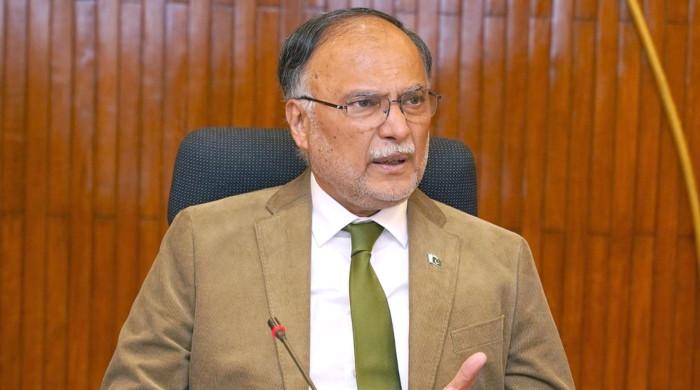
Planning Minister Ahsan Iqbal revealed on Friday that Pakistan “virtually” suffered an internal default during the PTI-led government in April 2022, saying the Ministry of Finance had said it had no money to release the final instalment of the development budget.
He was referring to the last days of Imran Khan-led government, which was ousted from power via opposition’s no-confidence motion on April 7, 2022.
Speaking on Geo News programme “Geo Pakistan”, the federal minister said the country’s economy has made a “remarkable recovery” since Imran’s ouster and under the Pakistan Muslim League-Nawaz (PML-N)-led coalition government.
“On April 1, 2022, for the first time in Pakistan’s history the Ministry of Finance raised its hands and said we will not release the final instalment of the development budget because we have no money,” he added.
“So, virtually, an internal default happened in April 2022,” he said, adding that people were then guessing Pakistan could also default externally within “4–6 weeks”.
Iqbal cited what he described as improvements in key indicators, saying Fitch, Standard & Poor’s and Moody’s upgraded Pakistan’s rating, while inflation that “was going up at the rate of 38%” had “come down to 4%”.
He said if inflation had not been brought under control, it would have continued rising each month. He added that the economy, which was “at zero”, posted 3.7% growth in the first quarter of the current fiscal year and claimed large-scale manufacturing was increasing. “The IMF [International Monetary Fund] programme is our programme up to 2027,” he said.
He said the government had taken a “conscious decision” in the budget to reduce duties in sectors that can enable exports and to “somewhat” liberalise imports for raw materials and machinery to raise export capacity.
He said such steps typically lift imports first, but that machinery and raw-material imports would “start translating into exports” in the coming quarters.
On whether relief was reaching the public, Iqbal said taxes on the salaried class were imposed “under compulsion” of the IMF and said tax filers had increased by “more than almost double”, with further relief promised in the next budget.
Calling taxation a “life and death” issue, he said every income earner would have to pay tax “whether he is a trader, whether he is a landowner”. He added that digitisation would help authorities match lifestyle and spending data with tax records.