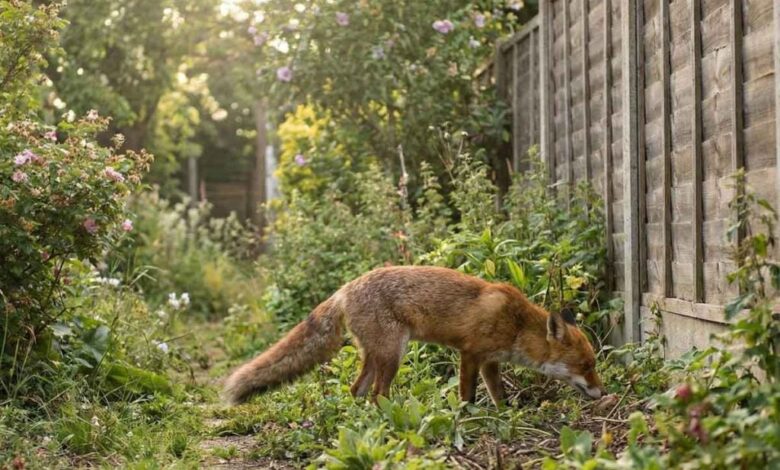
There is a special thrill in seeing the “Night Shift” arrive. Seeing the monochromatic stripe of a badger in the moonlight or the amber eyes of a fox pausing on the lawn is a magical experience.
However, these are large, powerful, wild animals. Feeding them requires a philosophy of “respectful distance.” We want to support them, not tame them.
The Fox: Maintaining the Wild Edge
Foxes (Vulpes vulpes) are incredibly adaptable opportunists. While they will eat almost anything, the goal is to provide a supplement, not a main meal.
You do not want a fox that relies solely on you, as it may struggle if you move house or go on holiday.
The Menu:
- Protein: Tinned dog food or cooked meat scraps (chicken carcasses are popular).
- Sweet Treats: Foxes have a sweet tooth. They love fruit (apples, plums) and are famously partial to a jam sandwich (though keep the sugar content moderate!).
- Bones: Cooked bones (like chicken wings) can splinter and injure them. Stick to raw bones or soft meat.

The Golden Rule: Do Not Hand Feed.
It might seem like a Disney moment to have a fox take food from your hand, but you are signing its death warrant. A fox that loses its fear of humans will eventually approach the wrong person—someone who sees it as a pest or a threat.
A bold fox is a vulnerable fox. Scatter the food and watch from the window.
The Badger: The Peanut Specialist
Badgers are creatures of habit living in social groups called clans. If you feed them, they will come every night—and they are strong enough to dig up your lawn or tip over dustbins if the service stops!
The Menu:
- Peanuts: Badgers absolutely love clean, unsalted peanuts. This is the easiest way to attract them.
- Fruit: Grapes, apples, and pears are excellent.
- Roots: Carrots resemble their natural diet of roots and tubers.

Conflict Avoidance: Badgers vs. Hedgehogs
This is a tricky one. Badgers are the primary natural predator of hedgehogs in the UK. They are the only animal strong enough to unroll a curled hedgehog.
However, they also compete for the same food (worms/slugs). This is known as Intraguild Predation.
The Strategy: If you have both visiting, do not feed them in the same spot.
- Feed the Badgers: Place their food (peanuts/fruit) in an open area at the bottom of the garden.
- Feed the Hedgehogs: Place their food inside a secure feeding station (see the Hedgehog Guide) near the house. The 13cm hole excludes the badger, keeping the hedgehog safe while it eats.
Managing Noise: The January Scream
If you are new to foxes, January can be a terrifying month. You may be woken up by a blood-curdling human-like scream.
- The Cause: This is the Vixen’s Scream. It is a contact call during the mating season. It is not an animal in pain; it is a sign of a healthy population.
- The Mitigation: Don’t leave food out late at night if the noise attracts too many rivals to one spot. Feed at dusk, then remove leftovers to prevent territorial squabbles at 3 a.m.

Urban vs Rural Behaviours
Studies show that urban fox territories are significantly smaller (sometimes just 25-40 hectares) compared to rural foxes (which can range over 600 hectares).
This means urban foxes are more tolerant of neighbours, but it also means disease can spread faster.
Want to help the birds in the garden too? Then check out our full guide at Feeding Garden Birds: A Year-Round Scientific Guide
Source link