Intro
Motorola has been doing a great job at offering affordable foldables under the Razr brand — well, “affordable” is a subjective concept here. But, by all means, the Motorola Razr (2024) costs $699.99 which is pretty impressive for a phone that folds right through its middle, right?
The Razr has a signature unique feel with its colorful faux leather back, and the bigger cover screen — it looks lovely, and is very useful, as it can run full Android apps instead of being restricted to widgets.
Galaxy Z Flip 6 vs Razr Plus (2024) differences:
| Galaxy Z Flip 6 | Razr Plus (2024) |
|---|---|
| Smaller when folded: 2.83 x 3.35 x 0.59 in | Slightly bigger: 2.91 x 3.47 x 0.62 in |
| Large ticker screen that houses various big widgets | Bigger cover screen, can run all Android apps |
| Snapdragon 8 Gen 3 — best CPU for Android right now | MediaTek Dimensity 7300X — midrange chip |
| 50 MP main camera, 12 MP ultra-wide 10 MP selfie |
50 MP main camera, 13 MP wide 32 MP selfie |
| 25 W wired charging | 30 W wired charging |
| 120 Hz main screen, 60 Hz cover screen | 120 Hz main screen, 90 Hz cover screen |
| 7 years of software support | 3 major OS updates |
| Supports Galaxy AI | AI task efficiency, AI photo booth |
| 256 GB / 12 GB – $1,099.99 | 256 GB / 8 GB – $699 |
Table of Contents:
Design and Size
Similar battle
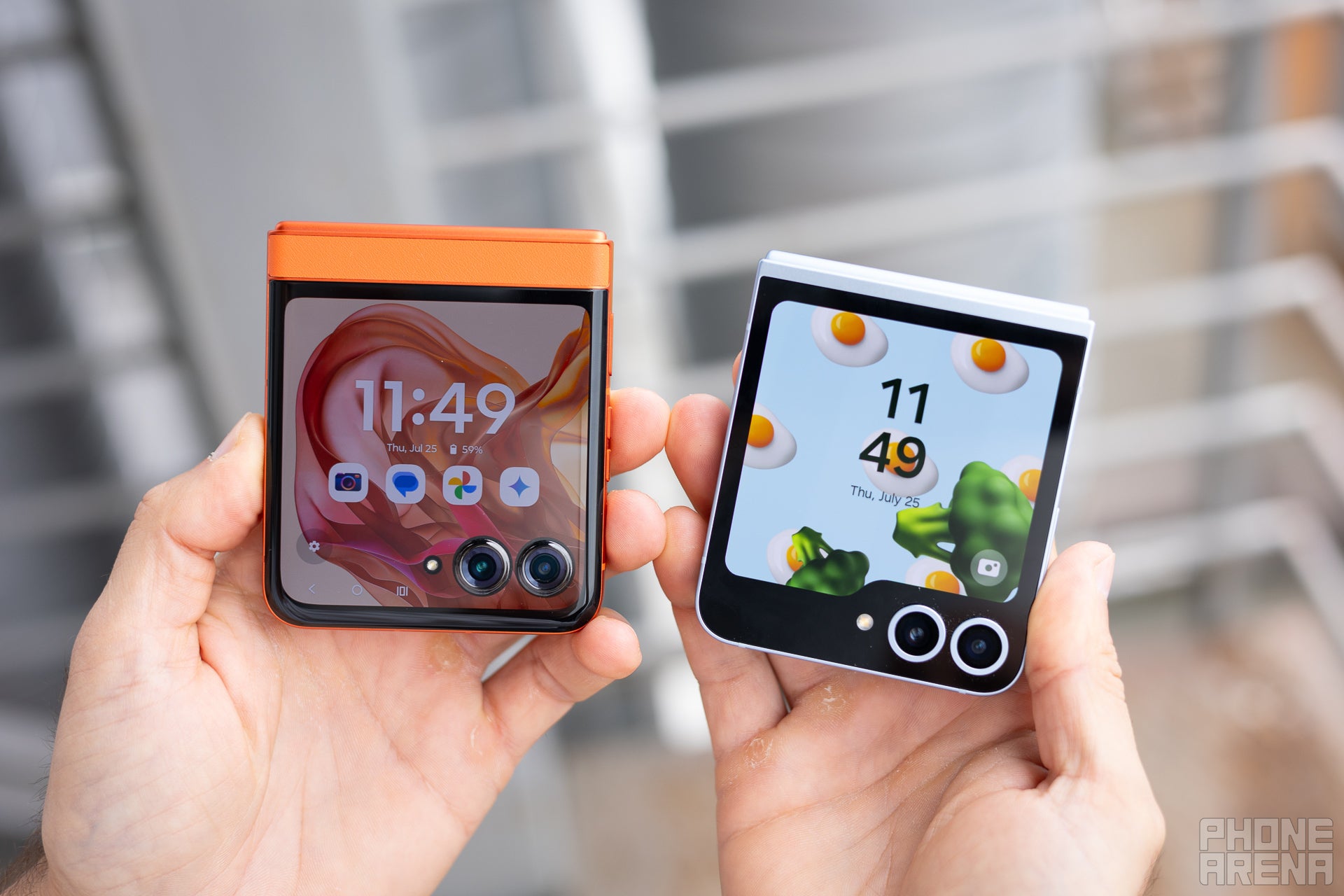
The Galaxy Z Flip 6 — like last year — has a slightly smaller cover screen, which is not a full rectangular shape as it steers awkwardly around the cameras. It’s fairly large, but it’s mostly a “ticker screen” — capable of showing oversized widgets. This includes widgets for stock Samsung apps, but there’s also an API for willing 3rd party developers to make their own.
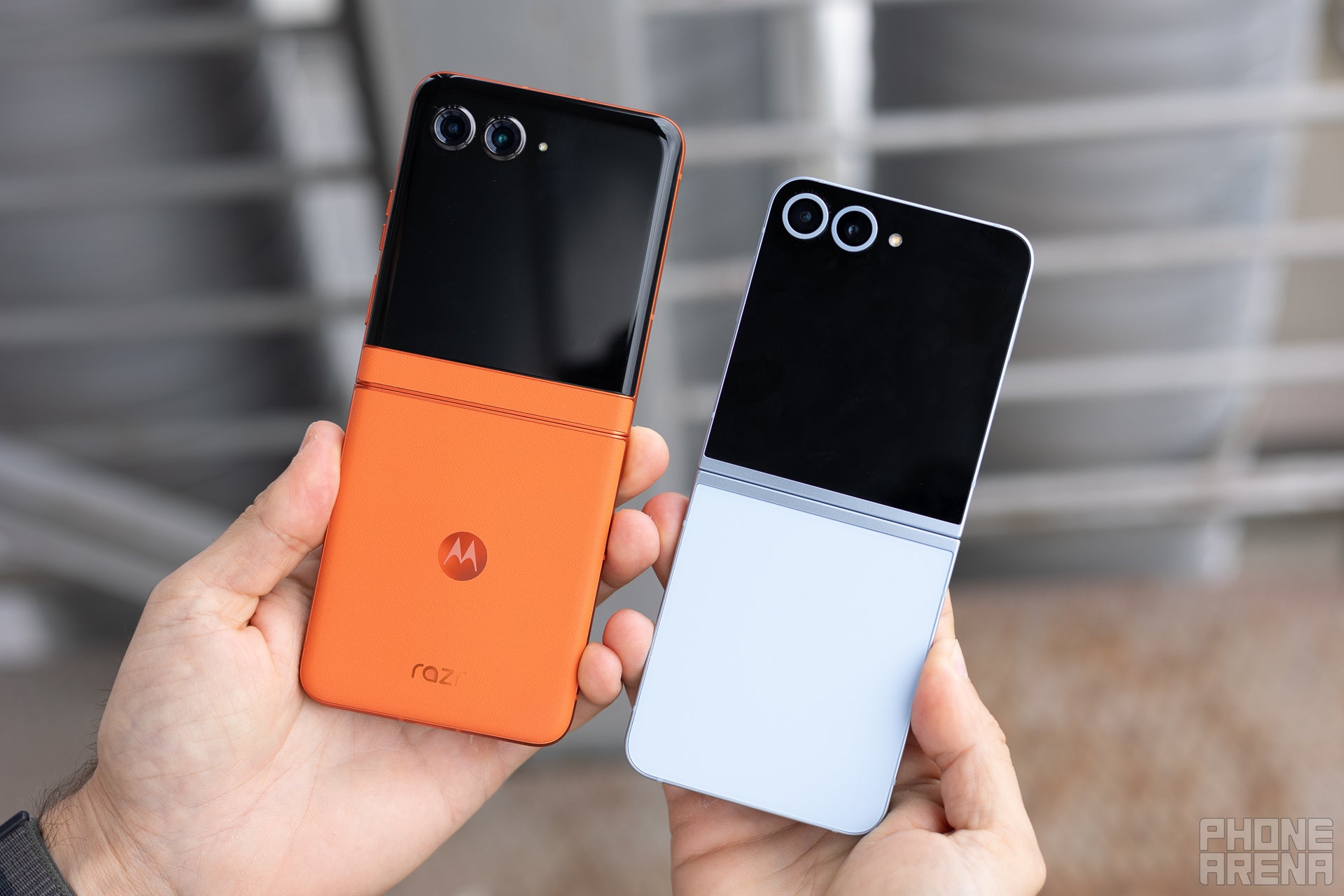
When it comes to build quality — we still need to get our hands on that base Motorola Razr (2024) to confirm, but the Razr Plus (2024) did have a sturdier hinge, which feld much more reassuring than before. The Z Flip 6 — like before — has a tight-feeling hinge that lets you prop the phone up in multiple comfortable viewing angles.
The Z Flip 6 comes with the new Gorilla Glass Victus 2 protecting the cover display, but Motorola didn’t skimp on shatter protection — it still has Gorilla Glass Victus for its own cover screen. Samsung did enhance its ingress protection to get an IP48 rating this year — it’s not dust-tight, but it will prevent particles 1mm or bigger from entering the phone’s hinge. Bit it’s water-resistant, and so is the Moto Razr with its IPX8 rating.
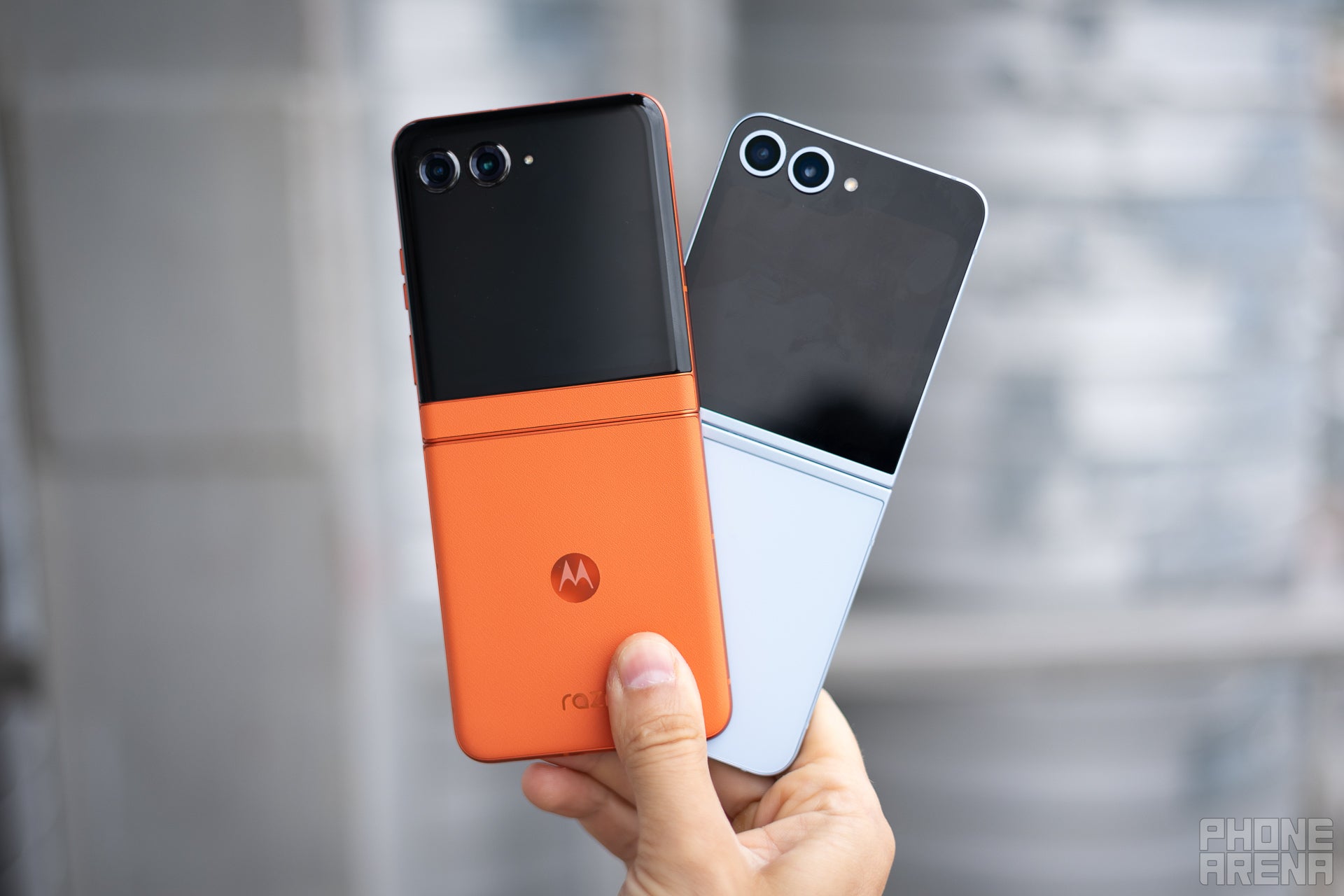
Colors-wise, the Razr (2024) comes in Spritz Orange, Beach Sand (light gray-ish with a pinch of tan), and Koala Gray. Samsung’s Z Flip 6 comes with more choice — Silver, Shadow, Yellow, Blue, Mint, then three more at the Samsung.com store — Crafted Black, White, and Peach.
The unboxing experience with both of these phones will be the same — both come with a USB C cable… and that’s it.
Display Differences
Both of these phones pack OLED main screens — the Galaxy Z Flip 6 has the Samsung-branded Dynamic AMOLED X2 screen hits a peak brightness of 2,600 nits, which will be great for HDR content. Its dynamic refresh rate goes as high as 120 Hz for smooth animations, though the external screen is locked to 60 Hz.
Display Measurements:
Also read: Galaxy Z Flip 6: Size Comparison
Both displays drift a bit towards the teal-ish hues, which is typical of today’s OLED panels. However, Samsung shows its expertise better, with the Z Flip 6’s display colors sticking closer to reality.
The main screens are similar in size, but it’s worth to mention that the Razr (2024) has a 6.9-inch display, the Z Flip 6 is slightly smaller at 6.7 inches. Both companies have worked to reduce — but not yet eliminate — the crease.
Additionally, the Z Flip 6’s cover display has 1,600 nits of peak brightness, which less than the 2,400 nits of the Moto’s external display. Keep in mind, though, these are peak brightness numbers — an area of the screen, measured for a small amount of time. We measure fullscreen brightness, and both phones performed similarly — getting close to 1,200 nits, which is excellent for outdoor visibility. The Z Flip 6 is noticeably better at bringing the brightness down — 0.7 nits is an incredible achievement and people who don’t put the phone down when the lights are out will appreciate it! The Razr’s 2.9 nits may be a bit annoying to sensitive eyes.
Performance and Software
We found the cut corners
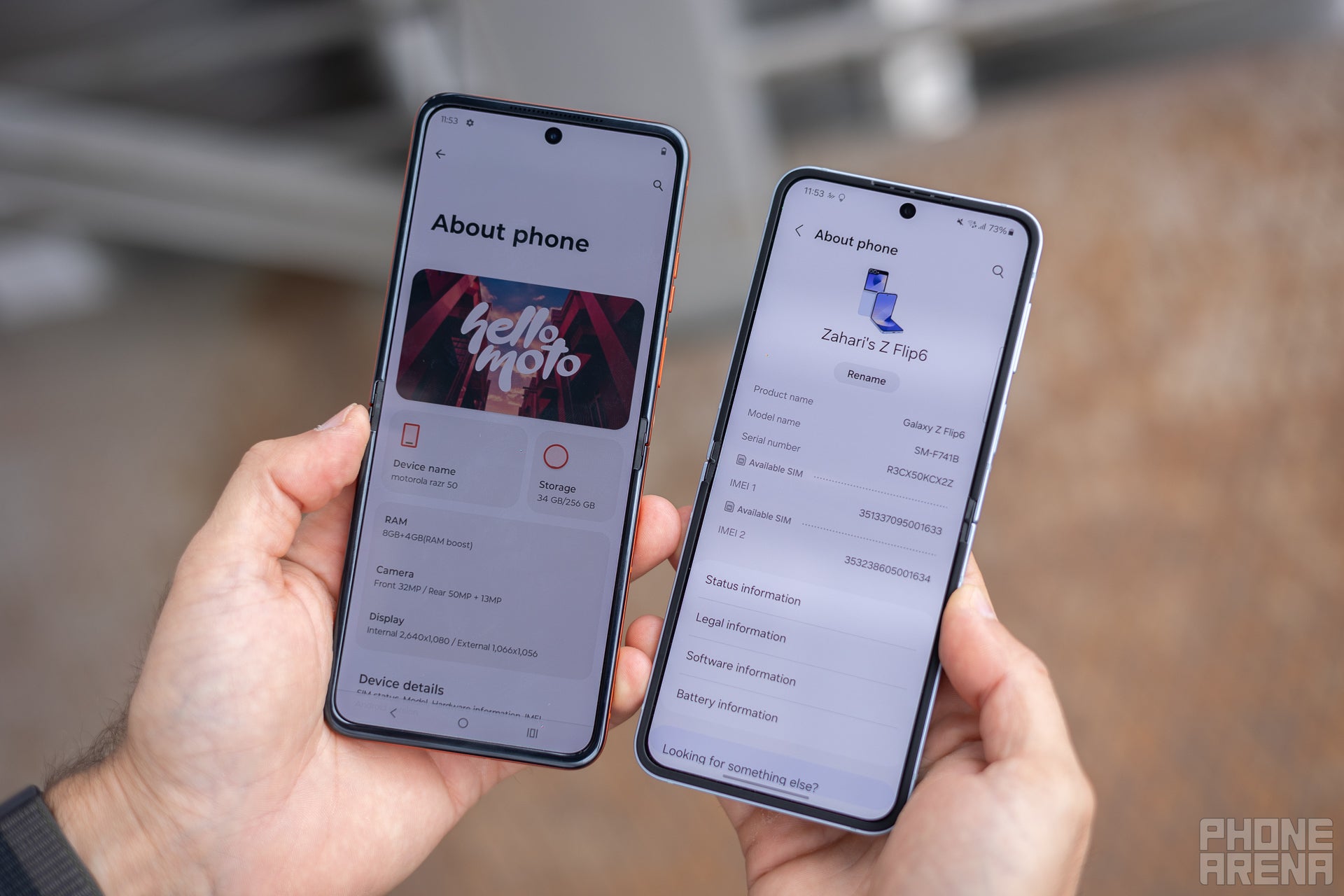
The Motorola Razr (2024) has a MediaTek Dimensity 7300X chip — that’s where the corners were cut. Its a midrange processor, which will feel slower than the Snapdragon 8 Gen 3, no way around that. It’s another octa-core, 4 nm chip, but taps out at 2.5 GHz.
The Dimensity does have an NPU core, but Motorola doesn’t utilize it for any fancy AI features — just a wallpaper generator, AI system optimization, and a photo booth with effects. The Galaxy Z Flip 6 has the full plethora of Galaxy AI on board — live call translation, generative image editing, recording and text summaries, the works.
And, with those scores, we can see why there’s no AI on board. The Motorola Razr (2024)’s low scores definitely raise an eyebrow. In general, it will run the phone for daily tasks quite reliably — we were kind of surprised how smooth it ran, we even booted up Arena Breakout: Infinite and managed to game a bit without the phone heating up too much. Granted, everything is on low and we dare not touch it.
Touch response is also pretty good — that’s something that will generally make phones feel slower than they actually are, so it’s good to see that Motorola is on top of it.
However, if you are interested in ensured snappiness and more power, the Z Flip 6 is the way to go here.
The Galaxy Z Flip 6 comes with 256 GB and 512 GB UFS 4.0 storage options, and 12 GB of LPDDR5 RAM. The memory chips, combined with the processor, are definitely a huge boost in performance over the Motorola.
As for software support, Samsung has started to offer 7 years of Android updates and security patches with its more premium phones, and the Z Flip 6 is no different. In comparison, Motorola continues to offer 3 years of Android updates.
Camera
Probably a steep hill for the Moto to climb
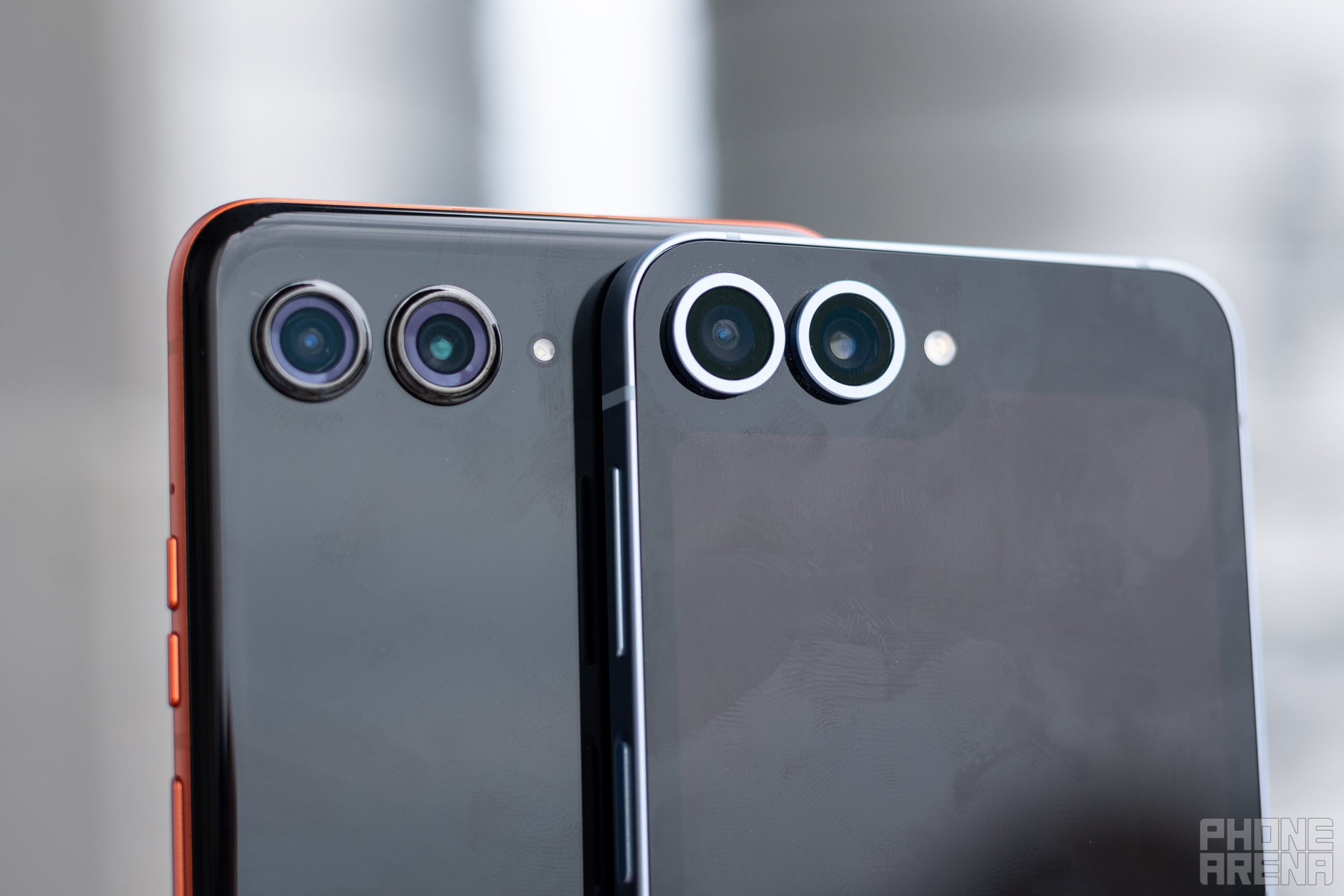
The two phones come with similar camera specs — 50 MP main and 12 MP ultra-wide on the Flip 6; 50 MP main and 13 MP ultra-wide for the Razr (2024).
For selfies, the Z Flip 6 sticks to a 10 MP snapper, the Motorola Razr (2024) has a 32 MP sensor for bragging rights.
So, here goes — which of these phones utilizes their cameras better?
Main Camera
In terms of colors, they are pretty close. However, the Galaxy Z Flip 6 handles high dynamics much better, where the Motorola Razr (2024) almost burned out the grass strands there. Also, there’s a ton of oversharpening happening on the Moto image here, which is why grass and leaves look a bit jagged, with some slight auras around them.
At night, the Galaxy Z Flip 6 produces significantly less noise and more balanced colors. It also keeps details nicely sharp and objects somewhat clear. The Moto Razr (2024) lets more noise show through, but that also helps it show off a bit more of the finer details in objects. However, its colors are heavily skewed towards the yellows, which is an effect often seen when phones are trying to expose a dark scene.
Zoom Quality
None of these phones has a dedicated zoom camera, so our hopes weren’t up for neither of them.
Yet, the Galaxy Z Flip 6‘s algorithms do a better job at cleaning up noise and sharpening detail. The zoom photos don’t look “real”, mind you — the processing is definitely evident. But it helps that subjects are better-visible in them.
Ultra-wide camera
Both ultra-wide cameras show impressive sharpness and handling of high dynamics. However, the colors from the Razr (2024)’s ultra-wide seem to be more natural, grounded, and realistic.
Selfies
The Moto Razr (2024)’s selfie camera gives us weird pink-ish skintones, flattens the dynamics in the face, and adds a bit too much sharpening. The Galaxy Z Flip 6 selfies look more natural, with soft, but realistic, detail and colors much more true to reality.
Video quality
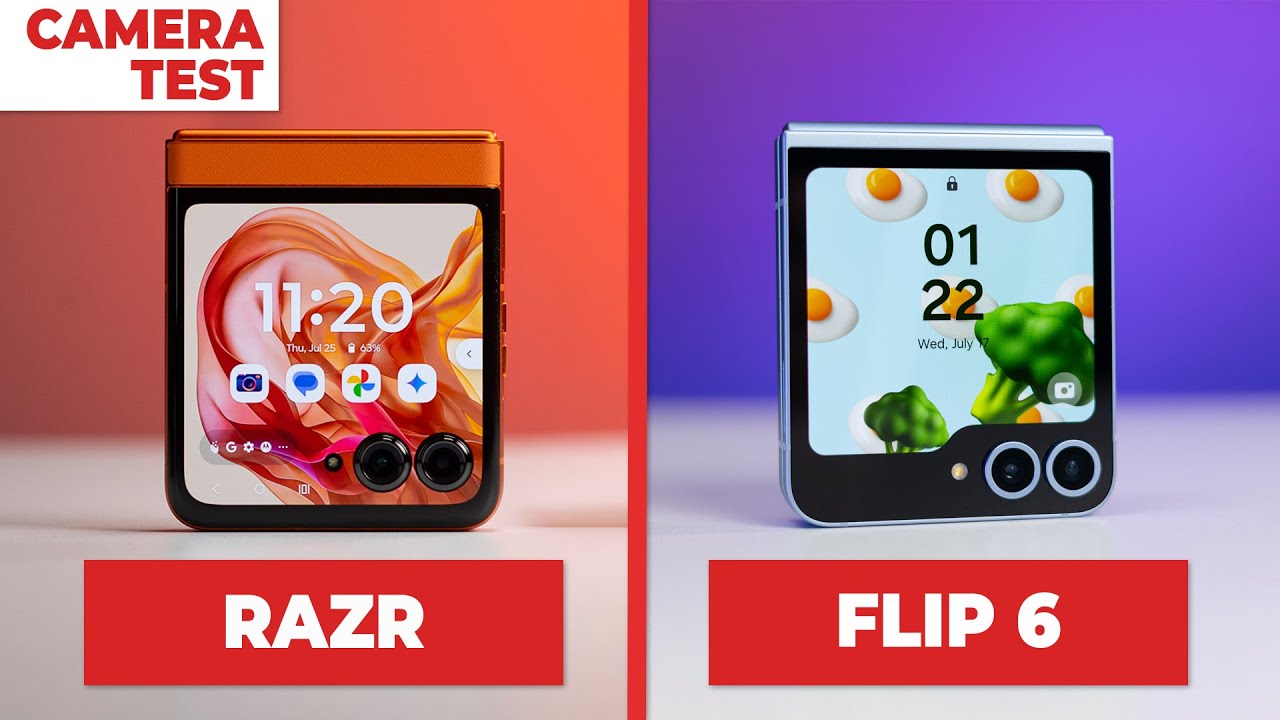
When shooting video, dynamics and details are comparable with both phones. However, the Galaxy Z Flip 6 skews colors a bit too much — towards the neon blue and neon green. The Razr (2024) keeps colors much more realistic in videos. Which is surprising, but hey — props to Motorola! Noise cancelation is a bit better on the Razr (2024), but stabilization seems to be less wobbly on the Z Flip 6.
Battery Life and Charging
Similar performance?
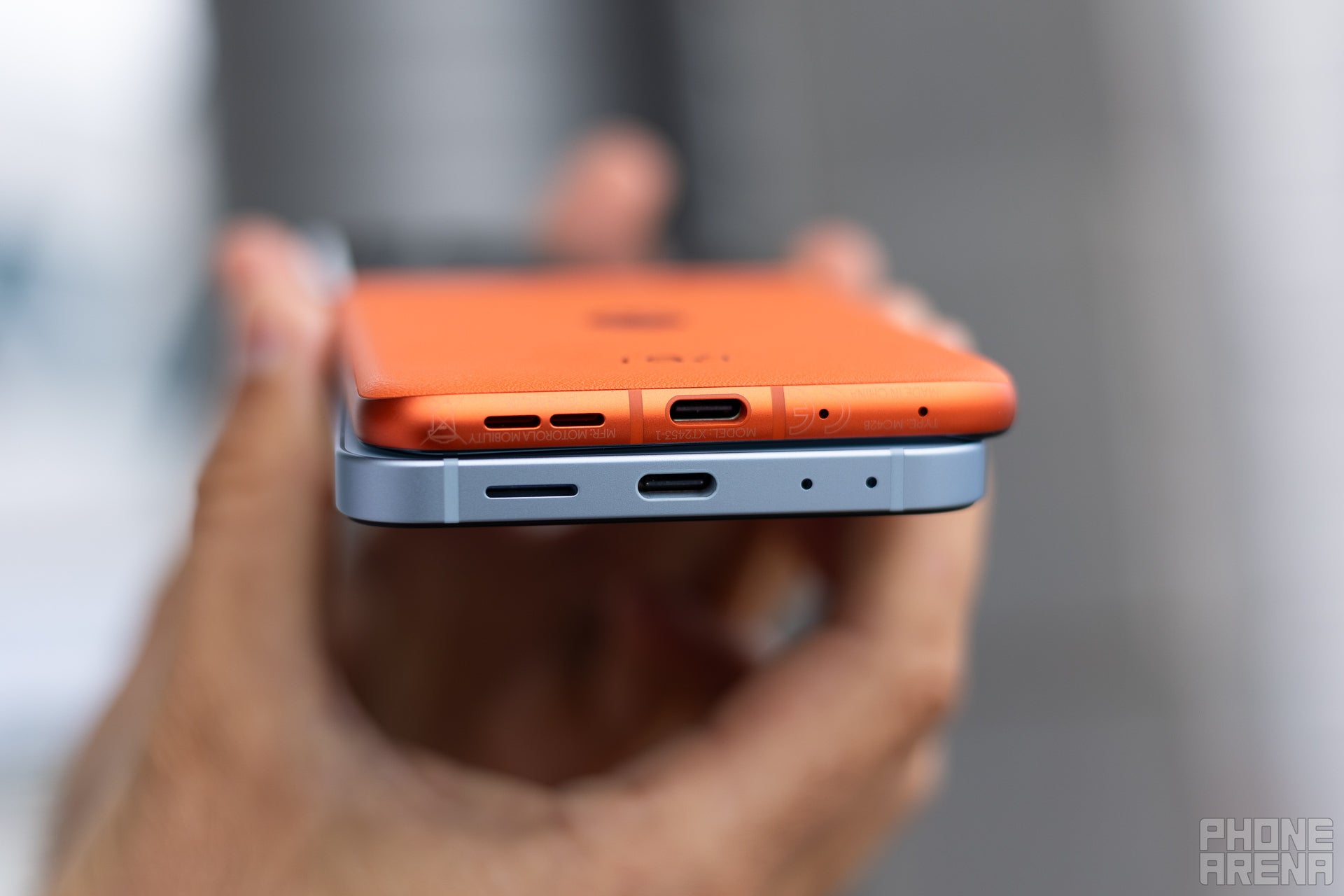
The Motorola Razr (2024) has the slightly bigger battery here, at 4,200 mAh. The Galaxy Z Flip 6 sports a 4,000 mAh cell. Yeah, these aren’t exactly flagship capacities here, but still quite impressive, considering how little room there is for battery in these folding phones.
PhoneArena Battery Test Results:
Eventhough it only has 200 mAh more in its cell, the Motorola Razr (2024) lasts quite a bit longer than the Galaxy Z Flip 6 — about 10-15% more battery life during web browsing and YouTube streaming. That’s also probably due to the fact that the processor inside is a less-powerful MediaTek Dimensity 7300X, so it’s not such a power hog.
But when we get to heavy tasks — like 3D gaming — the Galaxy Z Flip 6 barely breaks a sweat and doesn’t put as much stress on its battery. Which, together with the performance benchmarks, shows that powerusers should gravitate more towards the Z Flip 6.
PhoneArena Charging Test Results:
The Razr (2024) supports 30 W charging, the Z Flip 6 maxes out at 25 W. It’s a small difference and you won’t notice much change in small bursts of charging — up to 30 minutes in, both phones get about the same amount of juice. However, for a full 0-100% charge, the Razr (2024) definitely goes faster, a full 30 minutes faster than the Z Flip 6 to be exact! Both phones also support 15 W wireless top-up.
Audio quality and Haptics
For haptics, the Razr (2024) is definitely better. Strong, accurate, timely vibrations to reassure you as you navigate the UI. The Z Flip 6’s haptics aren’t bad — they just feel a bit slower and raspier by comparison. On its own, the Galaxy Z Flip 6 also feels nice.
Specs Comparison
| Galaxy Z Flip 6 | Razr (2024) | |
|---|---|---|
| Size, weight | Folded: 2.83 x 3.35 x 0.59 in (71.9 x 85.1 x 14.9 mm) Unfolded: 6.50 x 2.83 x 0.27 in (71.9 x 165.1 x 6.9 mm) Weight: 187 g |
Folded: 3.47 x 2.91 x 0.62 in (88.08 x 73.99 x 15.85mm) Unfolded: 6.74 x 2.91 x 0.29 in (171.30 x 73.99 x 7.25 mm) Weight: 188 g |
| Screen | Inner display: 6.7″ OLED, 120 Hz Cover display: 3.4″ OLED, 60 Hz |
Inner display: 6.9″ OLED, 120 Hz Cover display: 4″ OLED, 90 Hz |
| Processor | Qualcomm Snapdragon 8 Gen 3 (4 nm) 3.39 GHz, 8-core |
MediaTek Dimensity 7300X 2.5 GHz, 8-core |
| RAM, Storage | 12 / 256 GB 12 / 512 GB LPDDR5 memory |
8 / 256GB
LPDDR4X memory |
| Cameras | 50 MP main 12 MP ultra-wide 10 MP front |
50 MP main 13 MP ultra-wide 32MP front |
| Battery | 4,000 mAh | 4,200 mAh |
| Charging | USB-C 25 W wired 15 W wireless Reverse-wireless |
USB-C 30 W wired 15 W wireless Reverse-wireless |
Summary
Source link