There is a specific moment in the British spring that feels less like a changing of the seasons and more like a scene from a fairytale.
It happens just before the bluebells arrive, when the canopy of the trees is still bare enough to let the pale sunlight tumble down to the forest floor.
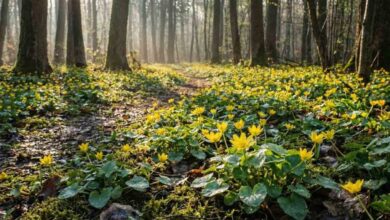
If you are walking in the right place, at the right time, you will find yourself wading through a galaxy of white stars.
This is the Wood Anemone (Anemone nemorosa).
While the Bluebell might be the loud, colourful finale of the spring woodland, the Wood Anemone is its quiet, ancient spirit.
It is a flower that demands a little more respect, because when you see a carpet of these delicate blooms, you are looking at a landscape that has remained virtually unchanged for centuries.

The Ghost in the Woods
I call them the spirit of the woods for a reason. Botanists call them an “Ancient Woodland Indicator.”
Unlike many other wildflowers that spread their seeds far and wide on the wind or via birds, the Wood Anemone is a creature of patience.
Its seeds are rarely fertile. Instead, it relies on creeping underground stems, known as rhizomes, to spread.
And when I say creeping, I mean it literally. They spread at a glacial pace—estimated to be around six feet (under two metres) every hundred years.
Stop and think about that for a moment. If you stand in a wood and see a drift of Wood Anemones stretching for fifty yards, you are looking at a patch that has been slowly traveling across that soil since the Middle Ages.
They are living proof that the ground beneath your boots has been undisturbed woodland for hundreds of years.

The Windflower and the Fox
As with all our native favourites, the Wood Anemone has collected a basketful of names over the centuries.
You might hear it called the Windflower. This is a direct nod to its Greek scientific name, Anemone, which comes from anemos (wind).
The old Greek legends tell us the flowers were created from the tears of the goddess Aphrodite as she wept over the death of her lover, Adonis.
Others say it is simply because the delicate stems are so flexible that the heavy flower heads nod and sway in the slightest breeze.
But if you head to the countryside, you might hear a much earthier name: Smell Fox.
It’s not quite as romantic as “Windflower,” is it? But it’s accurate.
If you get down on your hands and knees and take a sniff, the leaves have a distinct, musky scent. In parts of Derbyshire, they call it “Moggie Nightgown”—though “moggie” in that dialect actually refers to a mouse, not a cat!
A Fair-Weather Friend
One of the things I love most about the Wood Anemone is how it reacts to the British weather. It is a sun-worshipper.
On a bright, crisp March morning, the flowers will be held high, facing the sun to catch every photon of energy.
But watch what happens when the clouds roll in or the rain starts to fall. The flower droops its head and closes its petals (which are strictly speaking “sepals”) tight shut.

Folklore tells us that this is because the fairy folk use the flowers as shelter, curling up inside and pulling the petals closed like curtains to stay dry during a spring shower.
Identification: Don’t Eat The Salad
Identifying them is usually easy thanks to that carpet-forming habit. Look for:
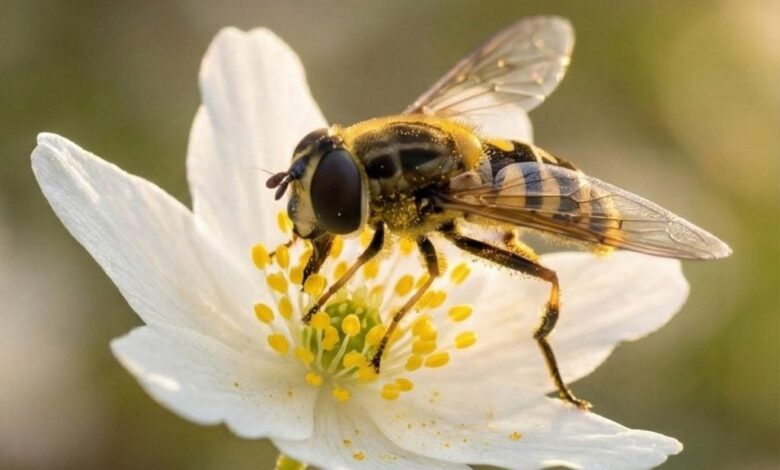
The Flower: Solitary white stars with 5 to 8 petals. They often have a lovely pinkish or purplish flush on the underside.
The Leaves: Deeply lobed and divided into three sections (trifoliate), sitting on long stalks.
A quick word of warning for the foragers among us: Do not eat them. While they might look fresh and green, Wood Anemones belong to the Buttercup family (Ranunculaceae) and contain protoanemonin, which is toxic and has an acrid, burning taste.
The Chinese even call it the “Flower of Death” because of its ghostly pallor and toxicity.

Catch Them While You Can
The Wood Anemone is ephemeral. It lives its life in the brief window of opportunity before the Oak and Beech trees above leaf out and block the sun.
By late May, as the canopy closes, the flowers will fade, the leaves will yellow, and the plant will retreat back into its rhizomes to sleep for another year.
So, grab your boots this weekend. Go find an old patch of woodland—the kind with gnarled trees and deep shade.
Look for the white stars. And when you find them, take a moment to appreciate that they were likely growing in that very spot when Kings and Queens were fighting for the throne of England.
Source link