CRI warns garment workers face rising climate-driven risks in global supply chains
KARACHI:
Pakistan and Bangladesh, despite being among the world’s lowest carbon emitters, continue to bear some of the harshest consequences of climate change, a reality underscored once again as the International Accord for Health and Safety in the Garment and Textile Industry moves to develop the first-ever Protocol on Heat Stress.
The international accord promotes workplace health and safety through independent safety inspections, training programs, and a complaints mechanism for workers.
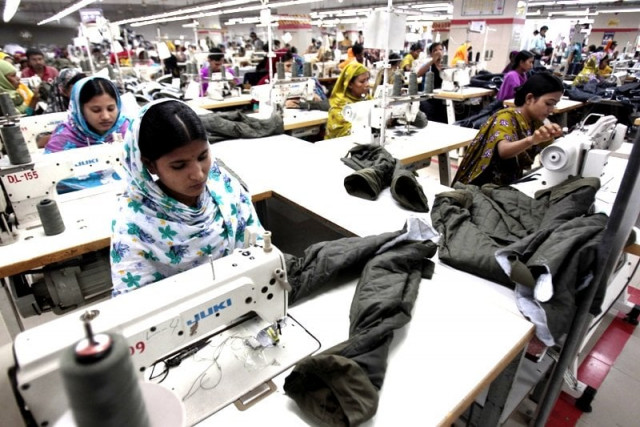
For Pakistan, where textiles account for more than 60% of national exports, the issue cuts to the heart of longstanding global imbalances: the clothing worn in wealthier countries is often produced in climates that are heating faster than global averages, inside facilities that were never designed for extreme temperatures, and by workers who have little ability to protect themselves. “The accord’s decision shows that binding, rights-based climate protections are not necessary but possible to protect the millions of workers who make clothes for people around the world,” said Cara Schulte, researcher at Climate Rights International (CRI), which repeatedly warned that rising temperatures inside garment factories across South Asia are exposing millions of workers, many earning subsistence-level wages, to dangerous and sometimes life-threatening conditions.
The ethical responsibility of Western fashion brands has come into renewed focus as CRI and 45 partner organisations stress that global supply chains must confront the human costs of climate change, not merely reduce emissions on paper.
The list of organisations who signed the September letter included Action Speaks Louder, All Pakistan Federation of United Trade Unites (APFUTU), Asia Human Rights and Labor Advocates (AHRLA), Awaj Foundation, Bangladesh, Bangladesh Apparel Workers Federation (BAWF), Bangladesh Institute of Labour Studies (BILS), Bangladesh Legal Aid and Services Trust (BLAST), etc. Although companies such as H&M, Inditex, Mango, PVH, and Marks & Spencer have signed the legally binding accord, CRI argues that their obligations extend far beyond compliance checklists. Reports from Karachi and Dhaka document workers fainting, suffering dehydration, and enduring heat-related illnesses while pushing through production targets tied to global demand cycles. These conditions, CRI stated, are a direct by-product of the climate crisis, one overwhelmingly fuelled by major industrialised nations that depend heavily on low-cost garment imports from South Asia.
The asymmetry is stark: Pakistan contributes less than 1% to global emissions yet ranks among the ten most climate-vulnerable countries, while Bangladesh faces similar pressures with even denser factory clusters and higher exposure to heat and humidity.
CRI’s advocacy is firmly positioned within the climate-justice movement, which argues that countries least responsible for global warming are disproportionately suffering its impacts. The group’s findings, presented in two investigations covering Bangladesh and Pakistan, highlight not only unsafe factory temperatures but also the structural power imbalances that constrain suppliers and workers. Factories in Karachi, Faisalabad, Lahore, Dhaka, and Gazipur often operate on razor-thin margins, leaving them unable, or unwilling, to invest in cooling systems, ventilation upgrades, and engineering improvements unless international buyers share the financial burden. Without enforceable global standards, CRI warns, brands will continue to externalise climate-related risks onto workers whose livelihoods depend on meeting tight export deadlines in increasingly hostile thermal conditions.
By confirming that heat stress is a “specific risk” falling within its country safety programmes, the International Accord has taken a step toward addressing what CRI calls “the climate inequality embedded in global fashion.” The upcoming Heat Stress Protocol, which will be integrated into inspections and remediation programmes in Pakistan and Bangladesh, acknowledges that extreme indoor heat is not merely a comfort issue but an occupational hazard exacerbated by climate change.
Source link